Uber Eats App Redesign
Re-Imagining the User Experience for Virtual Restaurants and Improved Tipping Options
Disclaimer
This is a UI/UX Personal Project by Fitsum Shebeshe and is not associated with Uber Eats.
Timeline
October 2022 - Ongoing
Background
While using Uber Eats in New York City, I discovered challenges in distinguishing between virtual and traditional restaurants. This experience sparked the initiative to create a more transparent and user-friendly interface.
Project Goals
-
Integrate virtual restaurants into the platform seamlessly.
-
Enable users to differentiate easily between virtual and traditional restaurants.
-
Enhance the tipping process to allow post-delivery tipping.
The Problem
Users face difficulties in identifying virtual restaurants and cannot tip based on the delivery experience due to the app's design limitations.
The Process

Research Methodology
-
User Research: Conducted through interviews and usability testing with a diverse demographic to capture a broad range of experiences.
-
Secondary Research: Investigated the growth of virtual restaurants and current trends in the food delivery market. Reviewed competitive platforms to identify strengths and weaknesses.
Secondary Research
Studied major competitors in the food delivery sector to benchmark features and identify opportunities for differentiation and improvement.
Virtual Restaurant Index

Virtual restaurant growth index on Uber Eats year over year.
According to Uber Eats, virtual restaurants on Uber Eats has doubled in 2022.
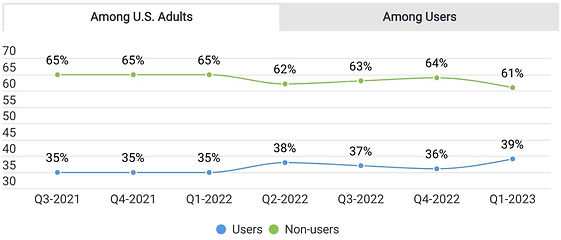
Quarterly User Percentages for Food Delivery Services Like Uber Eats
Source: civic science
Based on these statistics, it is evident that food delivery service apps like Uber Eats are worth prioritizing. However, despite its popularity, Uber Eats has some drawbacks. Firstly, virtual restaurants are not clearly labeled in the app, requiring users to determine the source of their food on their own. Secondly, locating past order history on the app is challenging, and does not provide the option to tip the delivery person after the order is delivered, insisting that users add the tip when placing the order instead. Therefore, it is crucial for Uber Eats to introduce new features that enhance usability and allow customers to make more informed decisions about their food.
Competitive Research
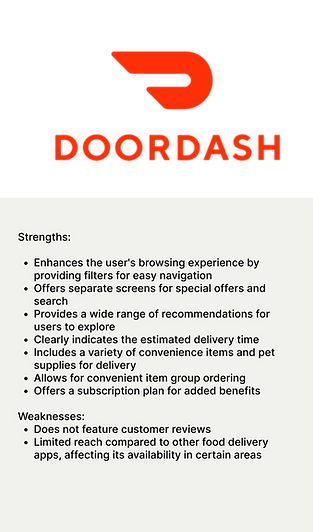
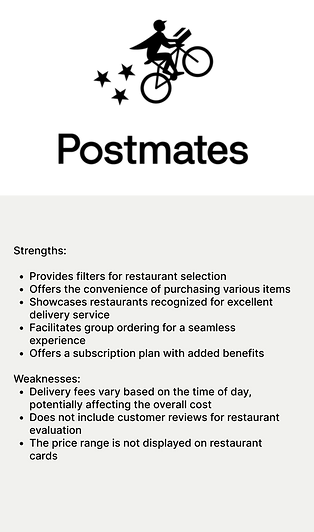
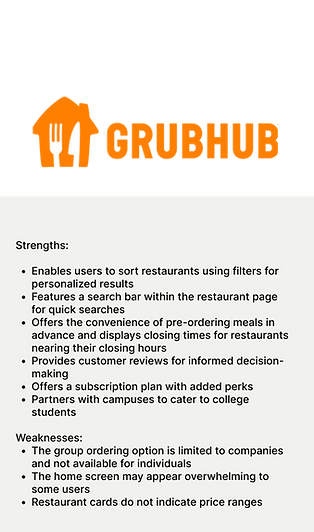
In order to gain deeper insights into the food delivery industry, I dedicated time to studying the leading competitors in the market. Throughout my research, I wrote down the strengths and weaknesses of each of the three competitors.
Collaboration
Worked closely with product managers and developers to ensure that design changes were aligned with technical capabilities and business objectives. Collaborated with the marketing team to plan user education on new features.
User Persona
Created a detailed persona, Yosi, who regularly uses food delivery apps, to guide the design process with realistic user challenges and needs.

Empathy Map
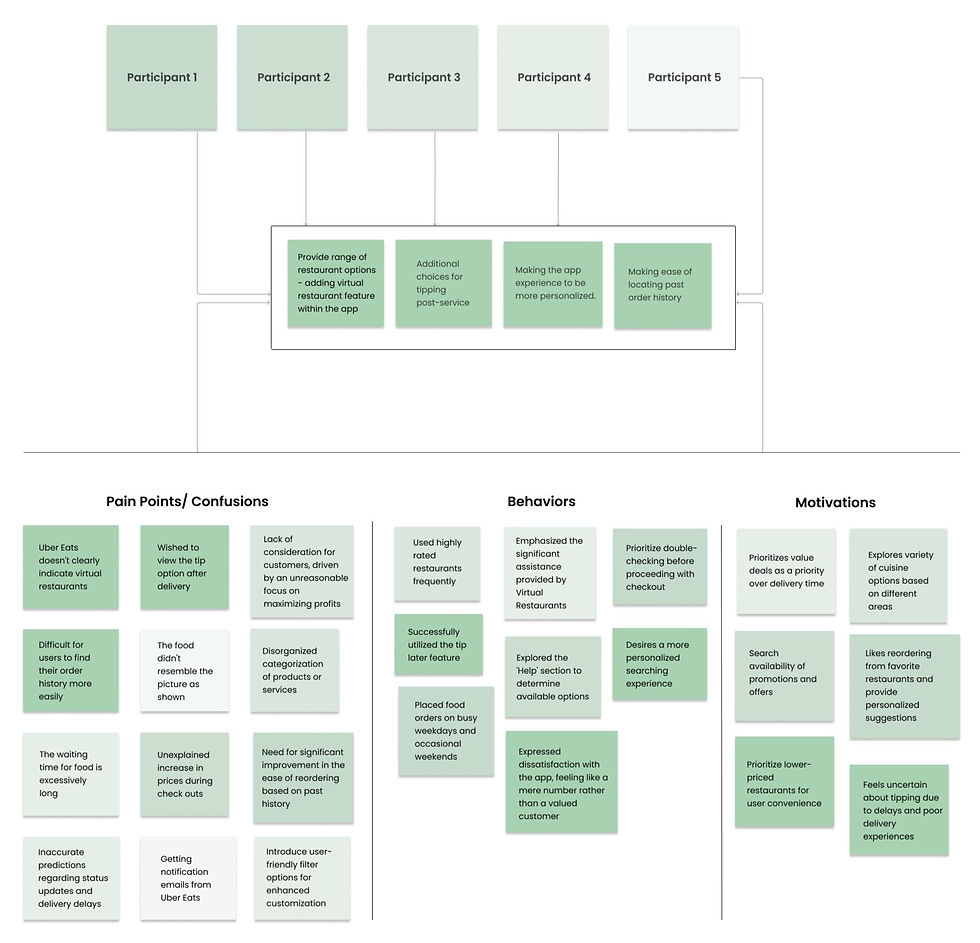
To give life to the user persona, I envisioned Yosi's thought patterns, behaviors, and attitudes as someone who regularly uses Uber Eats service apps. By compiling a list of these traits, it helped me to pinpoint the issue that required a resolution.

User Journey Map

User Flow
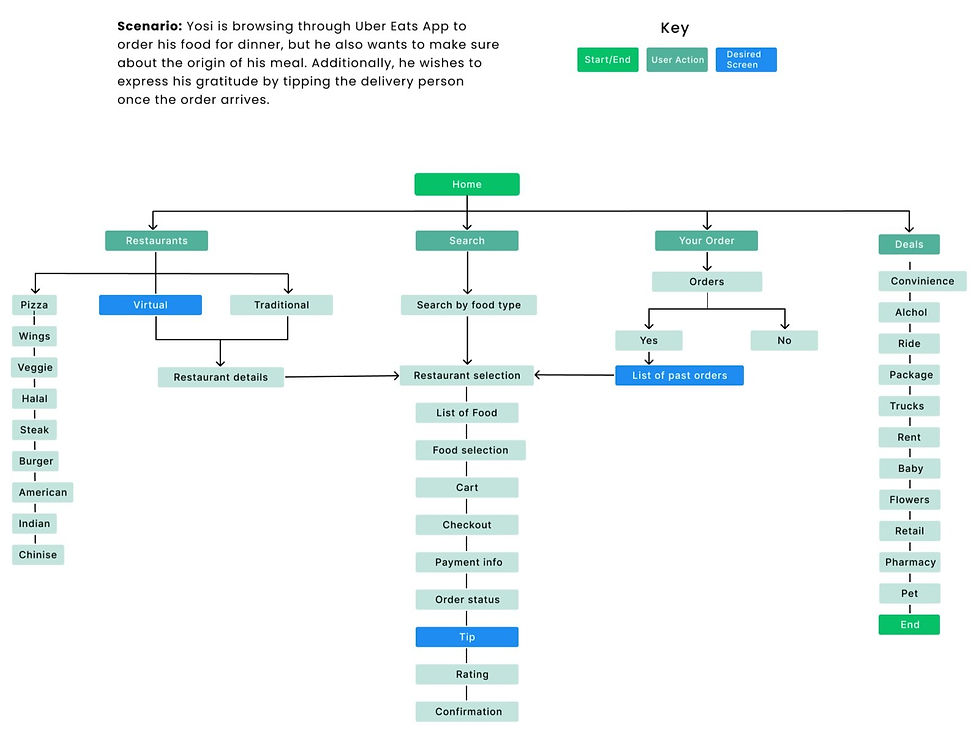
Using the user-centered problem statement as a reference, I devised a user flow to illustrate the various routes that Yosi, the user persona, might follow in order to make an order via the Uber Eats app. Specifically, I concentrated on the scenario where Yosi navigates through the Uber Eats app while having dinner and aims to determine if his meal originates from a traditional or virtual restaurant, as well as leave a tip after delivery.
Design Process
Information Architecture
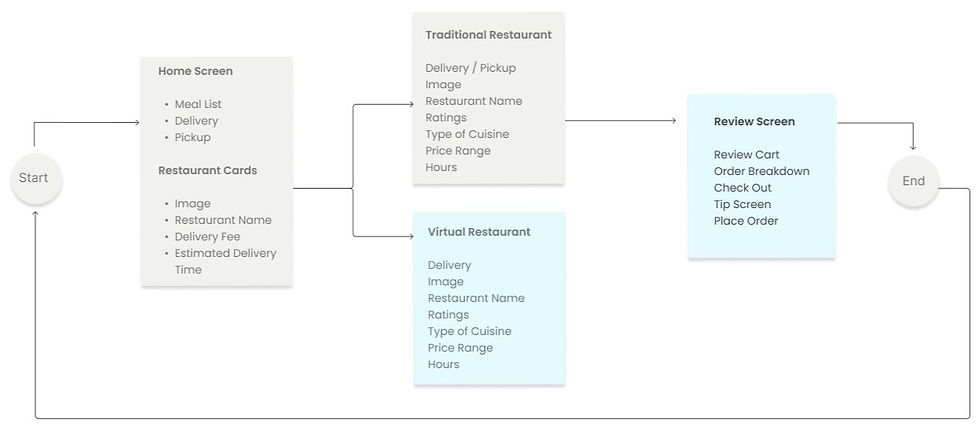
Developed a new information architecture to integrate features for identifying virtual restaurants and facilitating post-delivery tipping.
Affinity Map
Visual Design
To create the desired user experience for Snapbook, I chose Purple Pink as the primary color to evoke feelings of intuition, vision, and observation. Additionally, the color signifies the app's emphasis on creativity and wisdom in its products. For typography, I opted for two typefaces, Inter and Ubuntu, to achieve a simple, modern, and clean appearance that complements the overall look and feel of the app.

Low Fidelity Sketches & Wireframes5
Began with hand-drawn sketches to iterate design concepts rapidly, followed by creating low-fidelity digital wireframes in Figma.

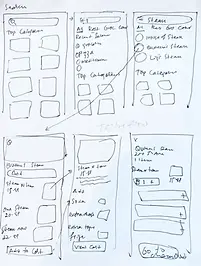

I translated my initial sketches to digital wireframes using Figma. I then prototyped my low fidelity wireframes using Figma and did usability tests with my users.


High Fidelity Wireframes
Designed detailed UI screens including the Home Screen, Restaurant Details, and Tipping Options, enhancing visual clarity and user interaction.


Key Features Introduced
-
Virtual Restaurant Indicator: A clear label for virtual restaurants.
-
Post-Delivery Tipping: A new feature allowing users to tip after receiving their service, reflecting their satisfaction.
Usability Testing & Feedback
-
Conducted multiple rounds of usability testing to refine the design, focusing on user clarity and ease of navigation. Feedback led to iterative improvements in UI clarity and functionality.
Accessibility Enhancements
Incorporated accessibility standards such as keyboard navigation and screen reader compatibility, ensuring the app is usable by a wide audience.
Outcome and Future Work
The redesign is expected to increase user engagement and satisfaction by making the app more intuitive and responsive to user needs. Continuous iterations and user feedback integration are planned to further refine the features.
Overview
This project focuses on redesigning the Uber Eats app to better integrate virtual restaurants, also known as ghost kitchens, and enhance the tipping functionalities. The goal is to increase user engagement and improve the earnings and satisfaction of delivery partners through an intuitive design.
Expected Results
-
By implementing intuitive navigation and clear distinctions between virtual and traditional restaurants, it is anticipated that user engagement time within the Uber Eats app will increase.
-
The introduction of a tipping option after delivery will result in an increase in tips given by users, leading to higher earnings for delivery partners and improved satisfaction among them.